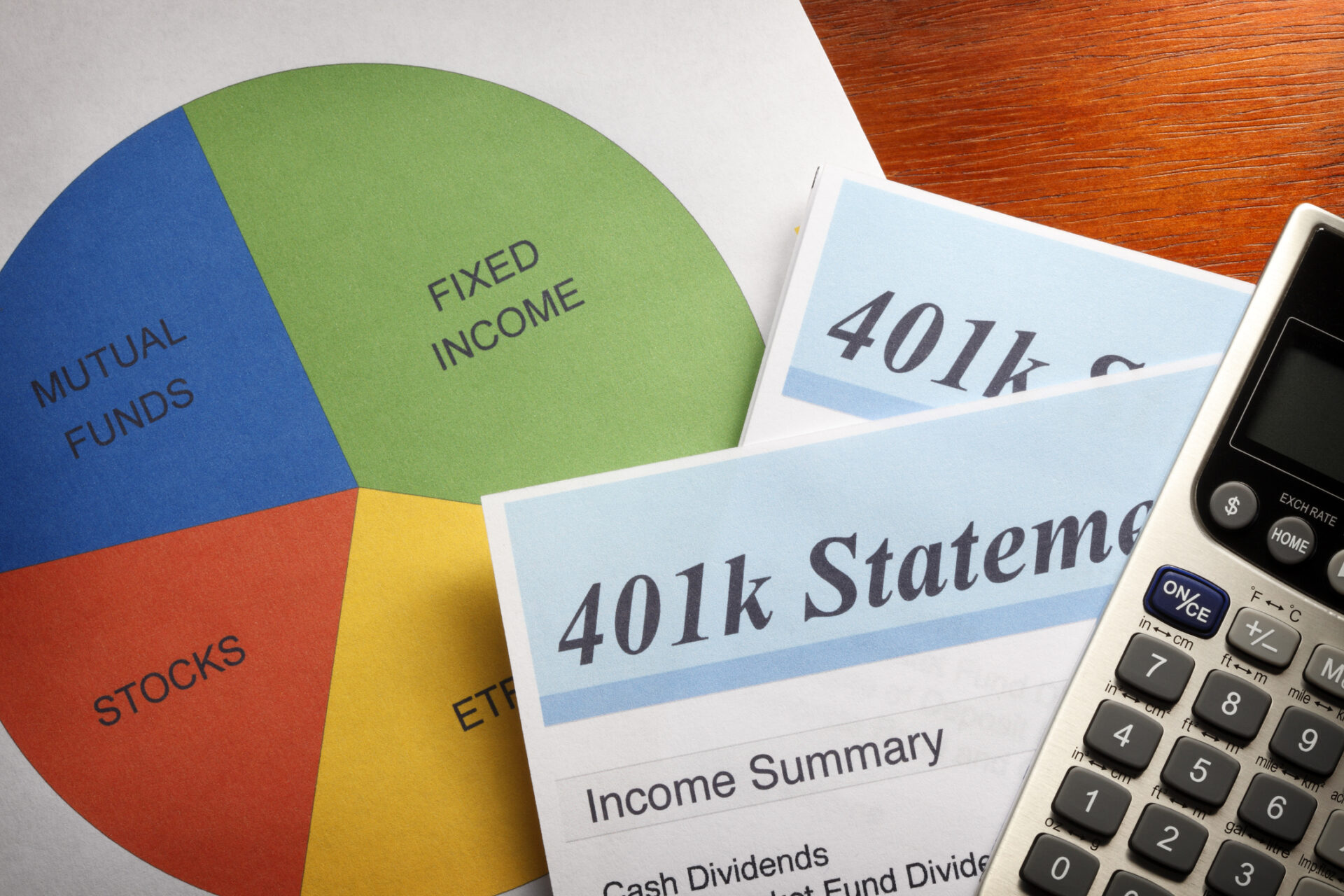

Planning for retirement may feel like a distant priority, but the steps you take today can determine the financial freedom you enjoy tomorrow.
401(k) Basics
A 401(k) is a common benefit employers offer to employees, where employees can contribute a portion of their paycheck to their retirement account. A 401(k) isn’t just a box to check during onboarding though – it’s one of the most powerful tools you have to build long-term wealth, reduce your tax burden, and set yourself up for a comfortable future.
A 401(k) contribution comes right out of your paycheck from pre-tax dollars and remains untaxed until the funds are withdrawn. It is a tax-efficient way to begin investing for retirement (with some restrictions around investing limits and withdrawals). If your employer offers a match, make sure you take advantage of that “free” money. An employer may match your entire contribution or only a portion of it – either way it’s more money for retirement!
But simply contributing isn’t enough. As you move through different stages of life, your goals, income, and appetite for risk naturally evolve. That’s why adjusting your 401(k) strategy to match your age and risk tolerance is essential. By tailoring your investment mix over time, you can protect what you’ve built, take advantage of growth when it makes sense, and stay on track for the retirement you envision.
Why Invest in Your 401(k)?
Once a portion of your wages has been put into your 401(k), you still have to choose investments, or the money will sit as cash like any other savings account. Investing in your 401(k) instead of a savings account is extremely important, as inflation will eat away at your savings.
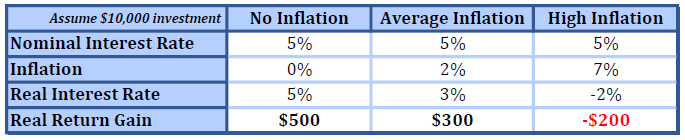
Imagine you have $10,000 to invest. Even if you invest in something as simple as a certificate of deposit (CD) with a 5 percent interest rate, it’s important to know how inflation negatively impacts your REAL spending rate. Economists and financial advisors will use the word “real” to mean the rate of return after accounting for inflation. In the example above, I laid out Scenario A with no inflation, Scenario B with average inflation, and Scenario C with high inflation.
In Scenario A with no inflation (a highly unlikely situation), if you were to earn 5 percent on $10,000, you would be able to keep and use all $1,500 at the end of the year. This is a return of $500.
Average inflation is assumed to be roughly 2 percent (the actual average depends on what time periods you use). At the end of the year in Scenario B you would still have $1,500, but you wouldn’t get the same use of those dollars as you did in Scenario A. You would only be able to buy $1,300 worth of stuff with your $1,500 because the prices of what you are buying increased. So your “real” return is only $300 instead of $500.
In the worst scenario of the three, Scenario C, we have 7 percent inflation. You again will have $1,500 at the end of the year like in the other scenarios, but with inflation being higher than the nominal rate (the interest rate before inflation is taken into account), you will only be able to buy $800 worth of stuff. In terms of “real” value, you actually lost money!
So even with guaranteed interest, inflation eats away at your spending power. When leaving your money in cash savings, without earnings from interest like in a CD or the growth in value of investments in the market, your spending power would have decreased by even more. This is why investing is more useful for retirement than savings.
Start Early and Often!
It doesn’t matter if you can spare $20 or $200 a month: don’t wait, as compound interest is extremely powerful for young investors. In an example below from the Federal Reserve, we have two hypothetical investors: one who saves a total of $50,000 in their retirement account from age 25 to age 34 then makes no more contributions, and one who starts investing later, at 35, but continues to contribute until age 65 for a total of $150,000.
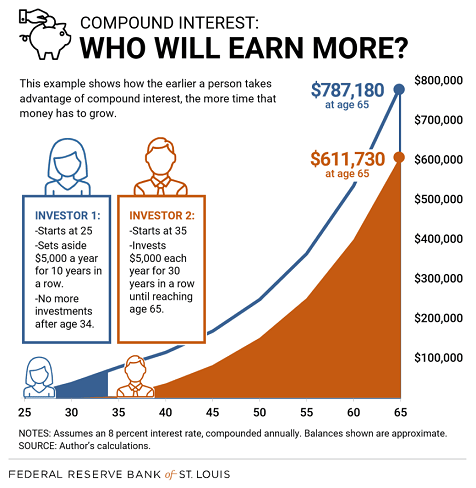
Assuming an 8 percent average rate of return annually, in the first scenario you would actually have a higher ending balance despite only contributing a third of the amount. This is because the investments were made earlier, and compound interest works its magic over a long period of time.
How to Invest in Your 401(k)?
So, how to invest? Most 401(k) plans offer a variety of options including mutual funds or ETFs. If you are wanting to set it and forget it, consider a Target Date Fund (TDF). When choosing a TDF from a provider like Vanguard or Fidelity, you simply pick the one matched with the year you plan on retiring. For instance if you plan on retiring sometime in 2050, you will pick a 2050 TDF. The further out you are from retirement, the more aggressive the investments are inside of the fund – meaning a very high equity allocation. The provider automatically rebalances your holdings on your behalf on a schedule, and as you move closer to retirement, the equity portion will gradually decrease in favor of fixed income investments.
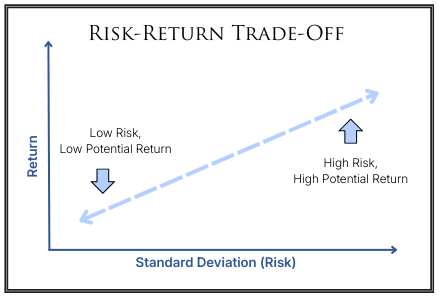
As illustrated above, you can see that with higher returns, investments generally have higher risk and vice versa. If you are young and far away from retirement, you might be towards the right-hand side of the trade-off line with high risk and potential of high return. This may look like a high-, if not all-, equity allocation in your 401(k).
If you are closer to retirement, you might want to focus more on less-risky investments (mainly fixed income and money markets), though that brings your potential return lower.
Building a secure financial future doesn’t happen by accident – it’s the result of consistent planning, informed decisions, and smart use of the tools available to you. A 401(k) is one of the most effective ways to grow your retirement savings, offering long-term compounding, valuable tax advantages, and, in many cases, employer contributions that boost your progress even further. By taking your 401(k) seriously today, you’re giving your future self more options, more stability, and more freedom. No matter where you are in your career, now is the perfect time to review your plan, make intentional choices, and keep your retirement goals firmly in sight.
Anessa Custovic, PhD