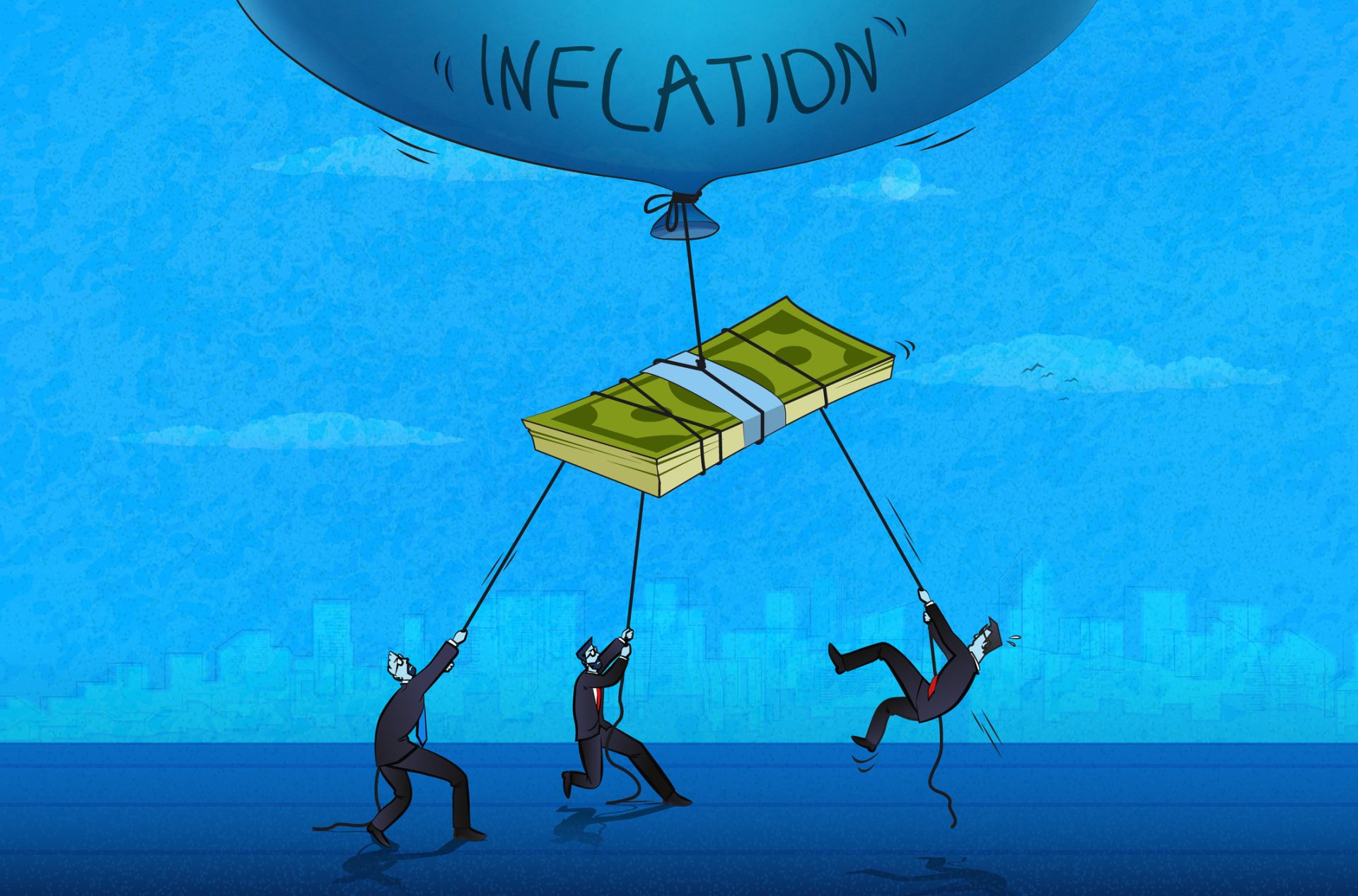

As I write the 2026 Capital Market Assumptions for Cardinal Retirement Planning we are entering the second year of the Trump presidency with less clarity than ever. There is cautious optimism, but mainly uncertainty and fear in the short run.
Outlook Summary
This report synthesizes 10-year capital market assumptions published by leading asset managers and research firms for the 2025–2026 outlook period. It examines consensus views on US and international equities, fixed income, and macroeconomic conditions, while identifying key divergences, upside risks, and downside risks to the base case.
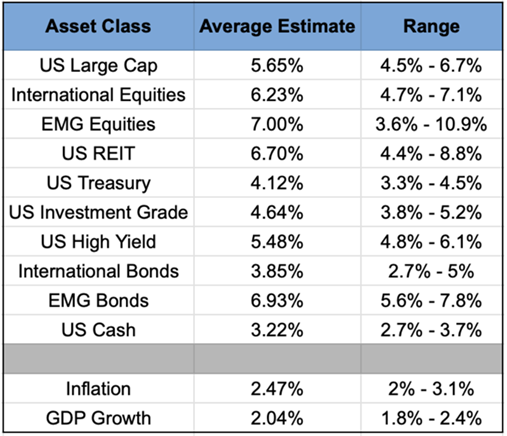
US Equity Outlook: Bulls, Bears and the Overvaluation Debate?
US equity forecasts generated divergence across forecasters. This disagreement reflects fundamentally different views on whether current US equity valuations are justifiable or represent a bubble that will eventually revert to the mean.
The bearish camp grounds its pessimism almost entirely in valuation metrics: Cyclically Adjusted P/E or CAPE is the preferred metric when it comes to valuations. Their central argument is straightforward: US equities are priced at historically extreme levels, and the next decade’s returns will be constrained by the drag of falling price/earnings multiples as valuations revert toward long-term averages. The bullish camp acknowledges the valuation concern but argues that superior US corporate earnings power, AI-driven productivity, and structural advantages justify a continued premium.
Favoring Fixed Income, and A Case for International Diversification
After years of near-zero yields that made bonds nearly useless as income generators, the rate normalization of 2022–2023 has fundamentally improved the fixed income opportunity set. Most forecasters project materially better fixed income returns over the next decade than were achievable in the 2010s.
The tight clustering of US aggregate bond forecasts reflects the mechanical nature of bond return forecasting: starting yields are an excellent predictor of 10-year forward returns. In contrast, high yield and emerging market bond spreads introduce more variation in forecasts.
One of the strongest consensus views across most forecasters is that non-US equities offer materially better 10-year return prospects than US equities. This is true for both developed markets (Europe, Japan, Australia) and emerging markets (China, India, Brazil, etc.). The valuation gap between US and non-US equities is currently near its widest level in modern history.
The single most compelling argument for international equities is valuation and tech exposure. Europe comparatively is trading at a discount and has less tech exposure than the US market, making it an attractive investment for those who are particularly bearish on tech.
US Macro Outlook
Despite their divergence on equity valuations, the forecasters share a broadly convergent view of the US macroeconomic backdrop over the next decade. The consensus picture is one of moderate growth, gradually declining but persistently above-target inflation, a high-for-longer interest rate environment, and elevated (though sustainable) fiscal deficits.
The consensus projects US real GDP growth of approximately 1.8–2.4 percent annually over the 10-year horizon — below the post-WWII average of ~3.0 percent but above recession levels. Key drivers of this moderation include:
Demographics: The baby boom generation is fully in retirement, reducing labor force participation. Immigration policy uncertainty adds further headwinds to labor supply. The Trump administration’s hardline on immigration (legal or illegal) is expected to be a big drag on GDP growth and employment.
Productivity: AI and automation offer a genuine upside wildcard. JPMorgan and BlackRock both note that generative AI could add to annual productivity growth — a potentially significant uplift if it materializes.
Debt service: With federal debt near 100 percent of GDP, increasing debt service costs are expected to act as a fiscal drag, crowding out productive investment.
Most economists now accept that the post-2021 inflation episode has fundamentally repriced the long-term inflation environment. The 10-year inflation forecast from most firms centers around 2.5–3.0 percent — above the Fed’s 2.0 percent target but far below the post COVID-era peak. Key contributors to sticky inflation include:
Deglobalization: Supply chain reshoring, friendshoring, and tariff increases represent a structural cost increase to the goods economy that was previously deflationary during the globalization era. With Trump’s strategy of tearing up trade agreements at a moment’s notice, this will likely result in inflationary pressures and substantial initial market volatility.
Fiscal stimulus: Both political parties have shown willingness to run large deficits, which is inherently inflationary.
Upside and Downside Risks
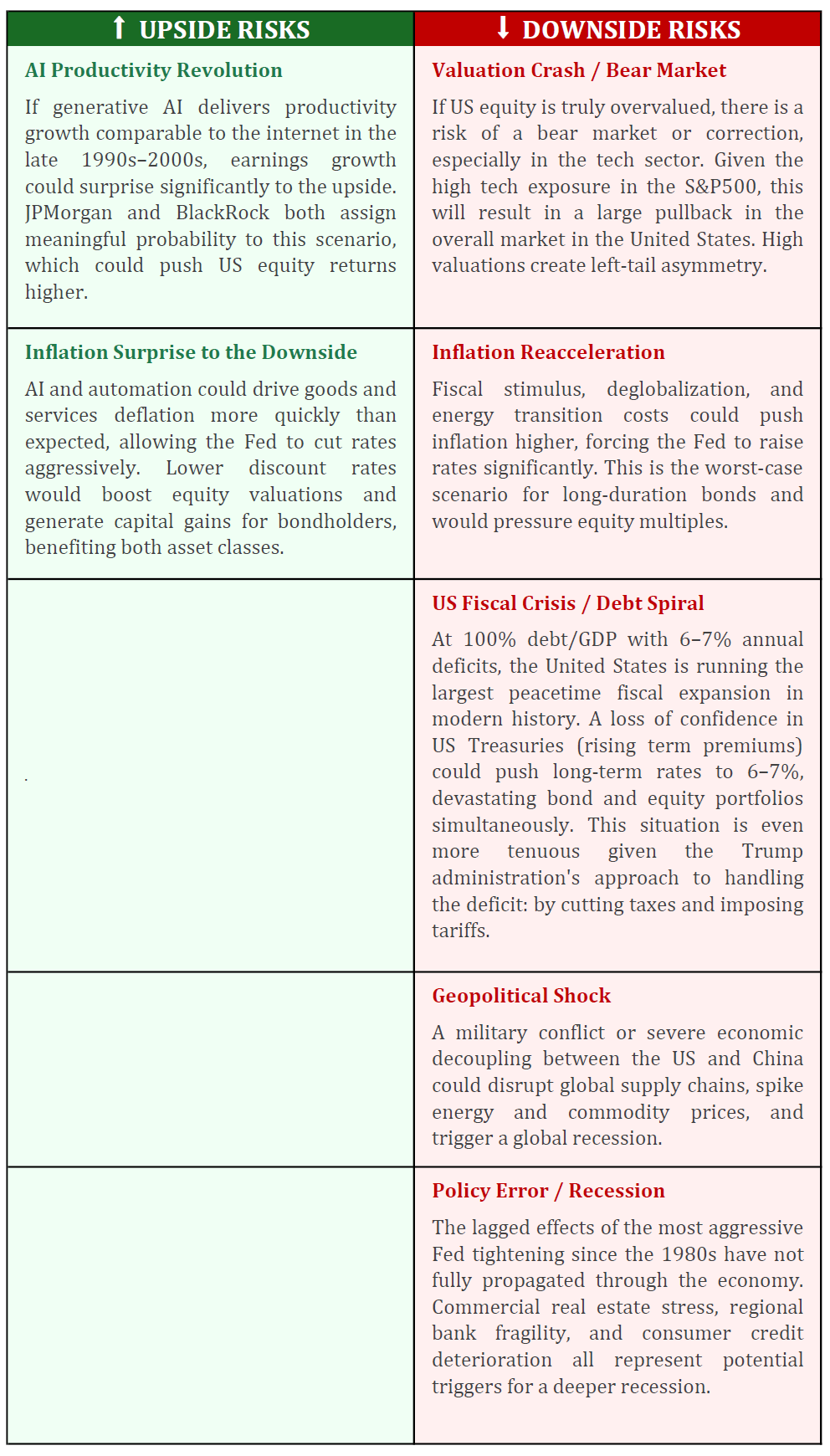
Below I outline some of the key risks, both upside and downside, to the US economy and thus the market as well. If upside risks are realized, we could likely expect returns or macroeconomic growth above top-end estimates, whereas if downside risks are realized, we might realize lower-end estimates.
US equities are likely to deliver below-historical-average returns over the next decade. The wide range reflects genuine uncertainty about valuation outcomes. International equities — both developed and emerging — offer a compelling valuation-based opportunity. Investors who avoid international diversification are implicitly making a large bet that US equity valuations remain permanently elevated.
Fixed income has genuinely attractive expected returns for the first time since the 1990s. The expected return range for US aggregate bonds means bonds can play a meaningful role in multi-asset portfolios, unlike the 2010–2021 era when near-zero yields made bonds a near-pure capital preservation (or loss) instrument.
The biggest risk to the consensus is the US fiscal situation. With no political consensus to address deficits, the US is on a path toward debt/GDP ratios not seen outside of wartime periods. While this is unlikely to trigger a crisis within the 10-year forecast window, it represents a tail risk that most base cases underweight.
AI productivity is the largest identified upside wildcard. If AI delivers even half of the productivity uplift that some forecasters attribute to it, earnings growth could outpace consensus significantly boosting equity returns and potentially reducing inflation simultaneously.
Anessa Custovic, PhD